ERP for Accounting and Tax Compliance in Africa: A Practical Guide for SMEs and Growing Enterprises
Introduction
Across Southern, Eastern, and Western Africa, businesses are facing increasing pressure to improve financial transparency, comply with evolving tax regulations, and operate efficiently in multi-currency environments. For many SMEs and mid-sized enterprises, traditional accounting methods are no longer sufficient.
Enterprise Resource Planning systems are becoming essential tools in this shift. By integrating accounting, taxation, inventory, and operational data into a single platform, ERP systems provide a structured way for businesses to stay compliant while scaling operations.
This article explores how ERP systems support accounting and tax compliance in Africa, the challenges businesses face, and why solutions like Odoo ERP and SAP ERP are increasingly being adopted across the continent.
The Growing Importance of Tax Compliance in Africa
Tax authorities across Africa are tightening compliance requirements. Countries such as Zimbabwe, South Africa, Kenya, and Nigeria are implementing stricter VAT reporting systems, electronic invoicing mandates, and real-time tax monitoring frameworks.
For businesses, this means:
- Increased reporting obligations
- Higher penalties for non-compliance
- More frequent audits and scrutiny
Manual accounting systems or disconnected software tools make it difficult to keep up with these requirements. Errors in VAT calculations, delayed filings, and inconsistent financial records can quickly expose a business to financial and legal risk.
ERP systems address these challenges by embedding compliance directly into financial workflows.
How ERP Systems Improve Accounting Accuracy
At its core, an ERP system centralizes financial data. Instead of relying on spreadsheets or multiple software tools, businesses operate from a single source of truth.
Key accounting benefits include:
Real-Time Financial Visibility
ERP systems provide up-to-date financial data, allowing business owners and finance teams to monitor cash flow, expenses, and revenue in real time.
Automated Bookkeeping
Transactions are automatically recorded and categorized, reducing human error and improving accuracy.
Standardized Financial Reporting
ERP platforms generate consistent financial statements, making it easier to comply with local accounting standards and international frameworks such as IFRS.
Solutions like Sage ERP and Microsoft Dynamics 365 are widely used in African markets for these capabilities.
ERP and Tax Compliance: A Critical Connection
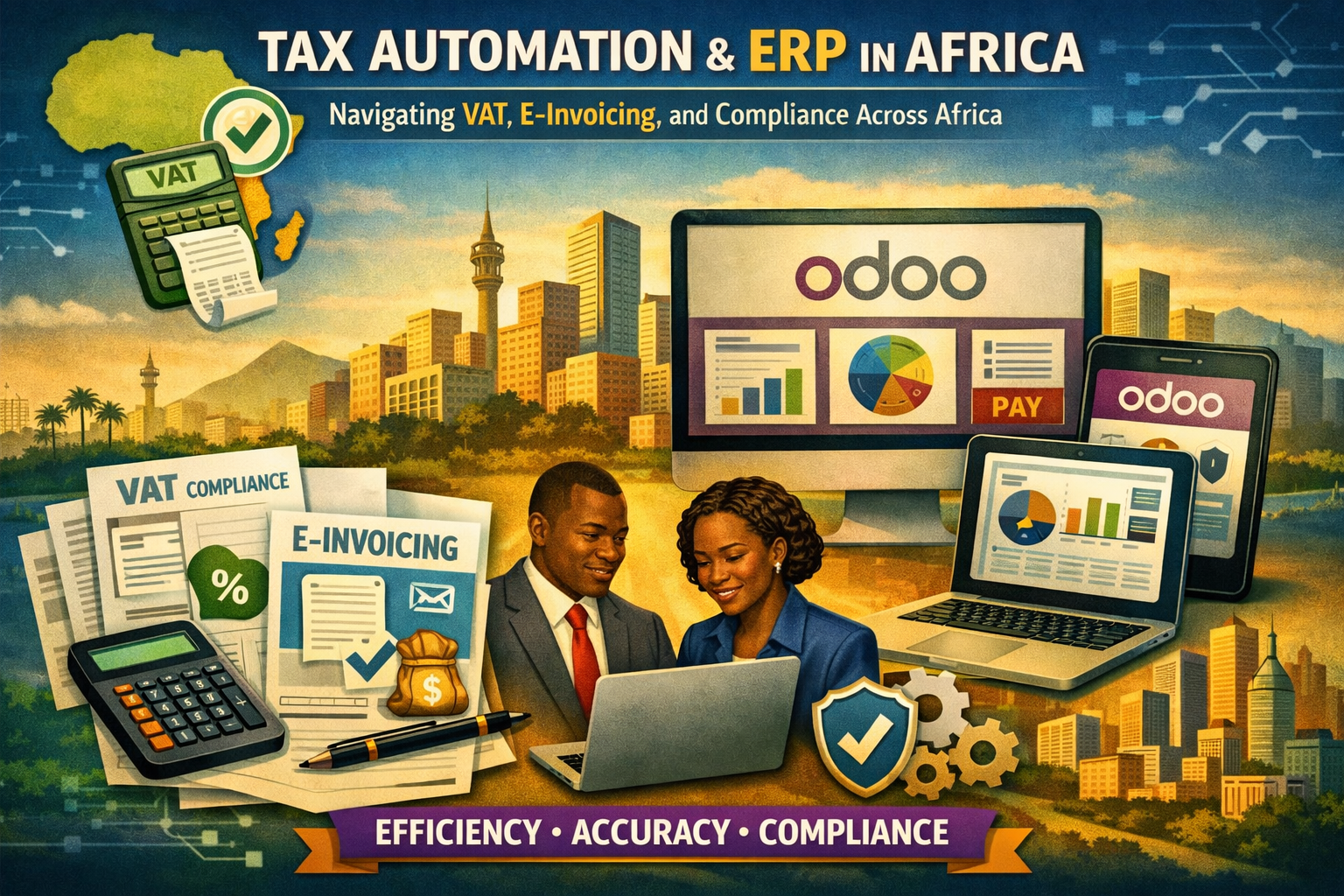
Tax compliance is one of the strongest drivers of ERP adoption in Africa. Governments are increasingly digitizing tax systems, requiring businesses to submit electronic returns and maintain accurate digital records.
ERP systems support compliance in several ways:
VAT Automation
ERP platforms automatically calculate VAT based on predefined tax rules, reducing the risk of miscalculations.
Electronic Invoicing
Many ERP systems support e-invoicing, ensuring that invoices meet regulatory requirements and can be easily tracked by tax authorities.
Audit Readiness
With all financial data stored in one system, businesses can quickly retrieve records during audits, reducing stress and preparation time.
Localization for African Tax Systems
Modern ERP solutions can be configured to comply with country-specific tax laws, including withholding taxes, PAYE, and customs duties.
This is particularly important for businesses operating in multiple countries within regional blocs such as SADC, COMESA, and ECOWAS.
Multi-Currency and Cross-Border Compliance
One of the unique challenges in Africa is operating across different currencies and regulatory environments. Businesses engaged in cross-border trade must manage exchange rates, tax variations, and reporting requirements simultaneously.
ERP systems simplify this complexity by:
- Supporting multiple currencies within a single platform
- Automatically converting transactions based on real-time exchange rates
- Generating country-specific tax reports
- Consolidating financial data across subsidiaries
For example, a business operating in Zimbabwe, Zambia, and South Africa can use an ERP system to manage all financial activities while remaining compliant in each jurisdiction.
Why Odoo ERP is Gaining Popularity in Africa
Among the various ERP solutions available, Odoo ERP has emerged as a strong contender in the African SME market.
Key reasons include:
Cost Efficiency
Odoo offers a modular pricing structure, allowing businesses to start small and scale as needed. This is particularly attractive in cost-sensitive markets.
Flexibility and Customization
Businesses can tailor the system to local tax requirements and operational needs without excessive complexity.
Integrated Applications
Odoo combines accounting, inventory, sales, and CRM into a single platform, reducing the need for multiple systems.
Open-Source Advantage
Its open-source nature allows for easier customization and localization, which is critical in diverse African markets.
Challenges of ERP Implementation in Africa
Despite its benefits, ERP adoption is not without challenges. Many businesses encounter obstacles during implementation, including:
Limited Technical Expertise
A shortage of skilled ERP professionals can slow down deployment and increase costs.
Data Migration Issues
Transferring data from legacy systems to an ERP platform can be complex and time-consuming.
Resistance to Change
Employees may be hesitant to adopt new systems, especially if they are accustomed to manual processes.
Infrastructure Constraints
In some regions, unreliable internet connectivity can affect cloud-based ERP performance.
To overcome these challenges, businesses must invest in proper planning, training, and ongoing support.
Best Practices for Successful ERP Adoption
To maximize the benefits of ERP for accounting and tax compliance, businesses should consider the following strategies:
Start with Clear Objectives
Define what you want to achieve, whether it is improved compliance, better reporting, or operational efficiency.
Choose the Right ERP Solution
Select a system that aligns with your business size, industry, and regulatory environment.
Work with Local Experts
Partnering with consultants who understand regional tax laws can significantly improve implementation success.
Invest in Training
Ensure that employees are well-trained to use the system effectively.
Plan for Scalability
Choose an ERP system that can grow with your business as it expands into new markets.
The Future of ERP and Compliance in Africa
The future of ERP in Africa is closely tied to digital transformation and regulatory evolution. Governments are expected to continue digitizing tax systems, introducing real-time reporting and stricter compliance measures.
At the same time, ERP systems are evolving to include:
- Artificial intelligence for financial forecasting
- Automated compliance updates
- Advanced analytics for decision-making
As these technologies mature, ERP systems will become even more critical for businesses seeking to remain competitive and compliant.
Conclusion
ERP systems are no longer a luxury for African businesses. They are becoming a necessity for managing accounting processes and ensuring tax compliance in increasingly complex regulatory environments.
By centralizing financial data, automating tax calculations, and supporting multi-currency operations, ERP platforms provide a strong foundation for sustainable growth.
The key question for business owners is no longer whether to adopt an ERP system, but how quickly they can implement one effectively.
In a market where compliance failures can be costly and growth opportunities are expanding across borders, the right ERP strategy could be the difference between operational control and financial risk.